

Protective clothing against liquid chemicals - EN 13034 3


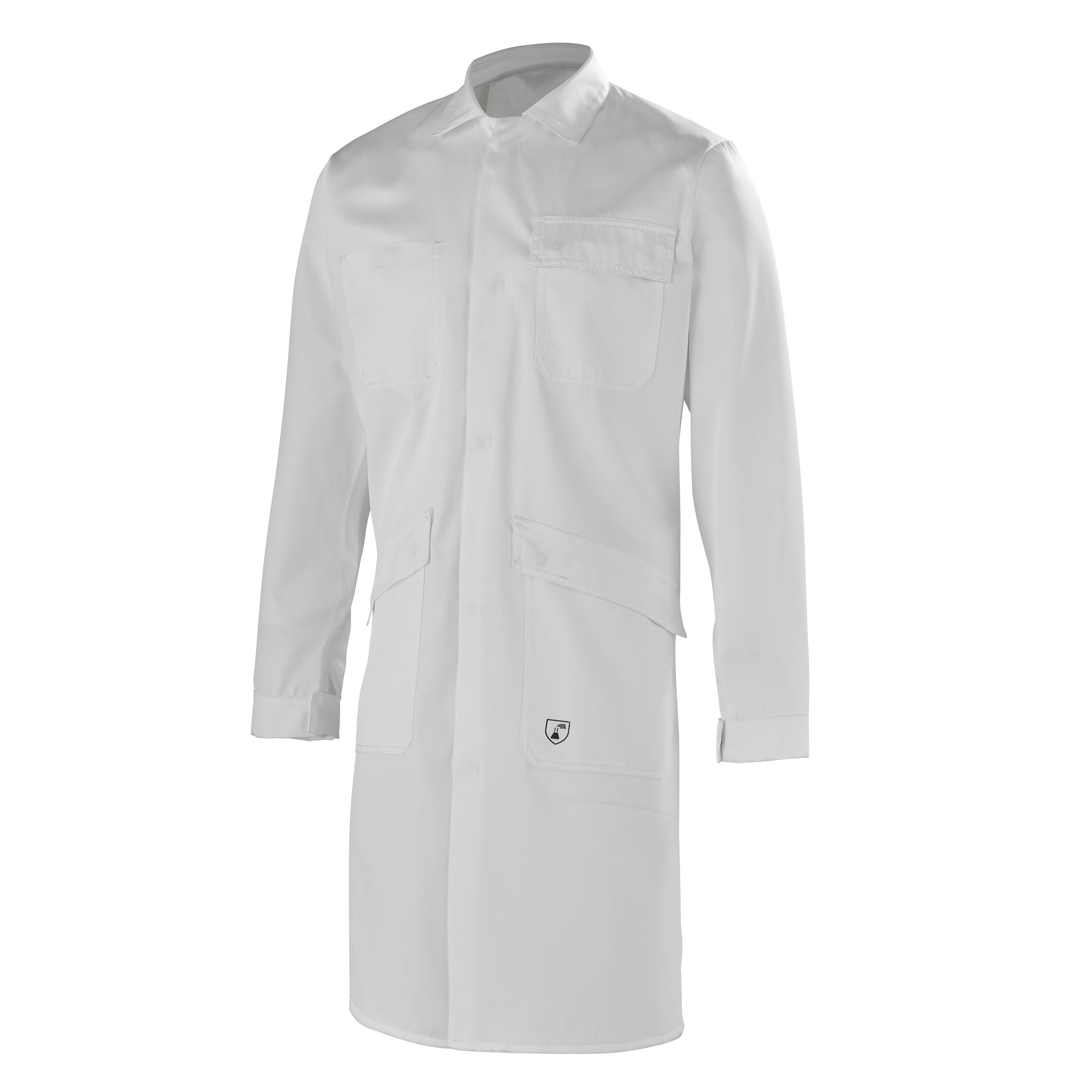
Protective clothing - Protective clothing against liquid chemicals - EN 13034
Why chemical protection is essential when dealing with hazardous substances
In many professional environments, chemical risk does not look like an "exceptional" danger. It is part of everyday tasks: cleaning parts, maintaining equipment, handling products, transferring liquids, degreasing, stripping or laboratory operations. Chemical protection serves precisely to keep these tasks under control, by reducing the likelihood that a splash, a spill or skin contamination turns into an accident. As soon as the skin comes into contact with a corrosive, irritating or toxic product, the consequences can be immediate or delayed, but they are always serious. That is why a chemical protective garment is not chosen "by eye" — it is chosen based on the actual hazard and the applicable standards. To place these garments within an overall compliance framework, you can start with the PPE and certified professional clothing collection, which brings together certified solutions suited to different trades.
Chemical risks present across many sectors
Chemical risks affect far more trades than one might imagine, because hazardous substances are not limited to laboratories. Solvents, acids, alkalis, hydrocarbons and industrial detergents are found in manufacturing, maintenance, logistics, industrial cleaning and many technical activities. Exposure can come from liquid splashes, aerosols or toxic dust, and these forms of exposure completely change the type of protection to prioritise. The danger is not limited to burns: it also includes skin absorption, severe irritation, allergies, and sometimes systemic effects depending on the toxicity. A well-chosen chemical-resistant outfit acts as a barrier, but above all as a safety net against the unexpected. In practice, it is often "one minute too many" or "one action too many" that causes the accident, and that is exactly what we aim to prevent.
- Handling of solvents, acids, alkalis, hydrocarbons
- Liquid splashes, aerosols and toxic dust
- Risks of skin absorption and severe irritation
- Manufacturing, maintenance, logistics, industrial cleaning, laboratory
A regulatory obligation governed by the Labour Code
Chemical protection is not just a matter of common sense — it also falls within a clear regulatory framework. The employer must carry out a prior assessment of chemical risks and document this analysis, particularly when the products used present identified hazards. They must then provide chemical risk PPE suited to the level of exposure, and ensure that teams know how to use them correctly. Compliance with harmonised European standards, together with CE marking, makes it possible to objectify the expected level of protection. This responsibility is not limited to "providing equipment" — it also involves choosing the right type of protection, at the right level, for the right use. An unsuitable or non-compliant outfit can give a false impression of safety, which paradoxically increases the risk.
The different chemical protective garments according to risk level
The chemical protective garments in the Cepovett Safety collection protect against liquid chemicals (sprays and splashes). This is the benchmark level of chemical protection for limited contact. Several families of protection exist. Between an occasional handling task with a low risk of splashing and a transfer operation with a risk of run-off, the need is not the same. A full-body chemical protective coverall is not always the most relevant solution, especially if it creates unnecessary ergonomic constraints. Conversely, a partial lab coat may be insufficient if the risk affects the lower body or if the exposure can become diffuse. The objective always remains the same: to obtain the necessary barrier level without sacrificing mobility and the ability to work effectively. As part of a coherent equipment approach, you can also look at targeted technical garments such as the Chemical Pro jacket, useful when protection needs to focus on the upper body.
The Type 6 full-body chemical protective coverall
The chemical protective coverall addresses the most extensive exposures, as it covers the entire body and limits penetration zones. It protects against splashes, aerosols and, depending on the model, solid particles, making it a versatile solution for hazardous operations. Sealed models of type 3 and 4 are intended for intense liquid risks, when splashing or spraying becomes plausible. Type 5 focuses on solid particles, while type 6 targets limited splashes, more common in light maintenance or controlled cleaning contexts. The choice therefore does not depend on the word "coverall" but on the actual exposure scenario, and this is what makes the difference between effective protection and protection that is simply "present". To build a complete outfit, consistency with suitable lower-body garments remains important, and a model such as the Chemical Pro trousers can be integrated into certain partial protection applications.
The chemical protective lab coat and Type BP6 partial outfits
In many cases, protection needs to focus on the chest, arms and the most likely impact zone, which makes the chemical protective lab coat particularly relevant. It is suitable for occasional handling, for workstations where the environment remains relatively controlled and for operations where the risk of splashing is limited to the upper body. This solution is often used in combination with other PPE, for example when wearing a mask and goggles is already mandatory. It offers better ergonomics than a full-body coverall, especially when the operator needs to move around, bend down or handle tools with precision. It also helps limit over-protection, which can lead to fatigue, excessive sweating and reduced alertness. To visualise this format, you can consult the Chemical Pro lab coat, designed for environments where the chemical barrier must remain compatible with field realities.
Chemical gloves and complementary accessories
Chemical protection never stops at the garment, because the risk very often concentrates on the extremities. Chemical gloves and accessories therefore constitute an essential layer, especially when dealing with corrosive products or solvents that rapidly attack certain materials. Sealed cuffs and overboots secure the interfaces, where infiltrations occur most easily during movement. Compatibility with respiratory masks and safety goggles also becomes decisive, because the outfit must form a coherent whole, with no weak spots. Secure closure systems, such as sealed seams and self-gripping flaps, play a practical role: they reduce the risk of liquid passing through by capillary action or run-off. In short, a good outfit is judged as much by its interfaces as by its main fabric.
Understanding chemical risk PPE standards
Standards serve to avoid guesswork, because they describe measured and reproducible performance levels. In the field of chemical risk, they make it possible to link an exposure scenario to a verifiable level of protection. They also indicate which forms of aggression the garment must withstand: splashing, run-off, solid particles, limited splashes, and sometimes penetration or permeation depending on the tests. In practice, you do not choose an outfit "because it looks thick" — you choose it because it meets the right standard and the right type. This approach protects teams and the company alike, because it secures compliance. It also simplifies purchasing by providing a clear decision-making framework.
The EN 13034 standard: the benchmark for protection against liquid chemicals
The EN 13034 standard is the only standard applicable to our collection. It covers limited protection against splashes and sprays of liquid chemicals. This is the lowest level of chemical protection, with no requirement for total sealing. It defines two classifications: Type 6 (full body coverage, e.g. coverall) and Type BP6 (partial body coverage, e.g. separate jacket and/or trousers). CE marking and compliance with Regulation (EU) 2016/425 govern these PPE items on the European market.
Choosing the right level of protection according to exposure
The right level of chemical protection depends first on the nature of the product being handled: corrosive, toxic, flammable or irritating, as each hazard changes the potential severity of contact. Next, concentration and duration of exposure matter, because a low concentration over a long period can become just as problematic as a high concentration over a short time. The risk of splashing or immersion also changes the approach: an occasional splash does not impose the same requirements as continuous run-off. Finally, environmental conditions such as temperature, humidity and ventilation influence comfort, perspiration and the stability of the protective barrier. The more precisely you describe the scenario, the more effectively you choose.
The essential criteria for choosing a chemical-resistant outfit
Even with standards in place, it remains essential to assess the practical characteristics of the outfit. Two products may target the same standard but offer very different sensations, cuts and interfaces at the workstation. A chemical-resistant outfit must protect, but it must also allow work to be carried out without creating constraints that lead to it being worn incorrectly. Protection that is too rigid or too hot leads to constant adjustments, which increases the risk of opening or exposure. Poorly fitted protection creates friction zones, which accelerates wear and weakens surfaces. The right choice is one that combines barrier performance, durability and real ergonomics.
Material strength and sealing
The performance of a chemical protective garment often relies on multi-layer, high-barrier fabrics capable of limiting penetration and permeation. Certain coatings target resistance to solvents and acids, which improves durability under aggressive conditions. Heat-sealed or taped seams reduce the risk of passage at assembly points, which remain the natural weak spots of garments. Permeation and penetration tests provide valuable indications of the fabric's barrier capability and how long it remains effective. The more demanding the scenario, the more decisive these details become.
Comfort and ergonomics at the workstation
Good chemical protection must allow the operator to move, bend and handle tools without any feeling of restriction. Freedom of movement has a direct impact on safety, because a constrained action increases the risk of error and splashing. Breathability, even partial, helps manage moisture during prolonged exertion and reduces discomfort. Precise anatomical fit limits friction and improves the stability of the outfit on the body. By reducing wearing fatigue, you also improve wearing discipline, and therefore the overall effectiveness of prevention.
Compatibility with other PPE
Chemical risk often involves the simultaneous wearing of several items of equipment: mask, goggles, helmet, and sometimes a harness depending on the intervention. The outfit must therefore integrate without creating gaps or insufficient overlap. The fit with safety footwear must remain consistent, as infiltrations often occur at the ankles and junctions. Layering must also preserve sealing, particularly at the wrists, neck and front closure. The ultimate objective remains maintaining overall protective performance, not just the quality of the garment taken in isolation.
Professional chemical protection by Cepovett Safety
On a subject as sensitive as chemical risk, the manufacturer's expertise matters, because it is reflected in the choice of materials, finishes and range consistency. Cepovett Safety develops solutions suited to industrial environments and usage constraints, with a clearly field-oriented approach. The selection of technical materials is based on barrier, resistance and durability criteria, because PPE must not deteriorate too quickly under real conditions. Quality controls at every stage help maintain a consistent level of performance, which gives companies confidence in their prevention policy. For a "complete outfit" and coherent approach, the triptych of Chemical Pro jacket, Chemical Pro trousers and Chemical Pro lab coat covers different scenarios, from targeted interventions to more comprehensive protection. Finally, returning to the certified PPE collection helps structure purchases and maintain compliance across all workstations.
Maintenance and compliance upkeep of chemical protective garments
An outfit that is compliant at the time of purchase can become non-compliant if it is poorly maintained or remains in service despite deterioration. Maintenance must therefore preserve the barrier properties without altering the coatings, sealed seams or closures. Recommended washing temperatures are not mere details — they determine the stability of the materials and the lifespan of the protection. Agents that attack barrier properties must also be avoided, particularly certain solvents or aggressive products mistakenly used to "clean better". Controlled drying also contributes to preserving performance, especially for technical textiles. Finally, regular inspection remains essential: checking seams, testing closures, monitoring surface integrity and immediate replacement in the event of a defect. PPE traceability within the company makes it possible to know who is wearing what, when and in what condition, which strengthens both prevention and compliance.

CEPOVETT SAFETY
The French benchmark in professional protective clothing
For nearly 8 decades, CEPOVETT SAFETY has leveraged its experience and the global expertise of the CEPOVETT group to offer carefully designed PPE that meets the strictest standards.