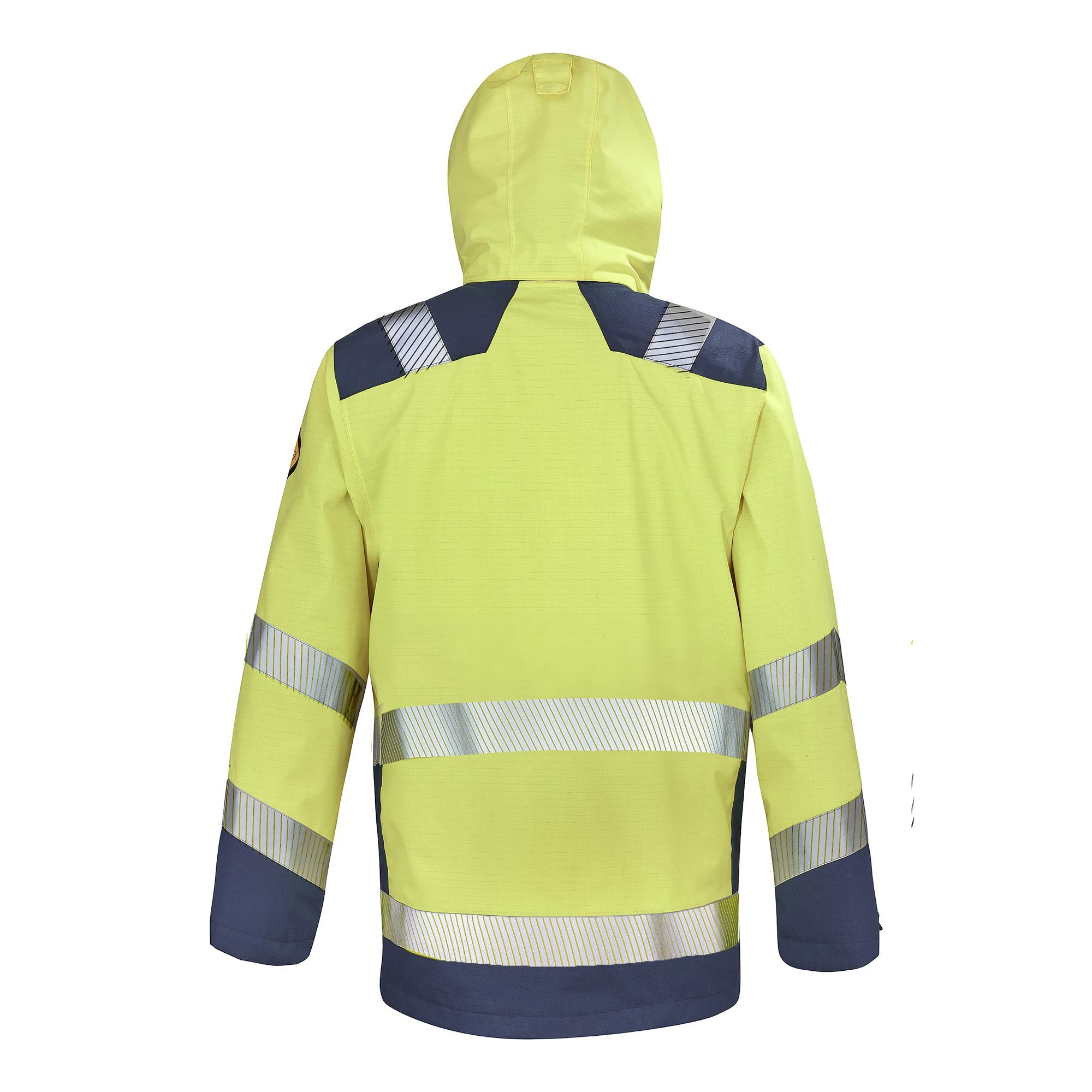
Why choose arc flash protective clothing for live electrical work?
Live working or working near electrical installations exposes your teams to one of the most severe risks in industrial environments: arc flash. Within milliseconds, a discharge can release extreme thermal energy capable of causing serious burns. Arc flash protective clothing, certified to the EN 61482 standard, forms an essential technical barrier to limit the consequences of such an incident.
Cepovett Safety offers a comprehensive range of electrician's protective clothing designed for professions exposed to arc flash. Built to combine thermal performance, antistatic properties and wearing comfort, these PPE garments are designed for electricians, maintenance technicians and energy sector professionals. Here is an overview of the risks, applicable standards and selection criteria to help you choose the arc flash protective clothing suited to your role.
What is the EN 61482 standard for arc flash protection?
The EN 61482 standard defines the requirements and test methods applicable to protective clothing against the thermal hazards of an electric arc. It governs both the selection of fabrics and the performance criteria that a garment must meet to be considered protective against this type of risk.
Two test methods and performance values
EN 61482 is based on two complementary approaches. Each one characterises the fabric's resistance to the thermal energy generated by the arc, but using distinct test configurations. Understanding these methods helps you choose a garment suited to the actual risk level of the workstation.
- EN 61482-1-1: open arc test, measuring ATPV or EBT values in cal/cm²
- EN 61482-1-2: constrained arc test or Box Test, classifying the garment as Class 1 or Class 2
- ATPV value: maximum thermal energy withstood before risk of second-degree burns
- ELIM value: exposure limit associated with a risk of severe burns below 5%
Protection classes to know
The constrained arc test distinguishes two performance levels. Class 1 corresponds to resistance to a 4 kA arc, for moderate-risk operations. Class 2 withstands a 7 kA arc and protects against the most energetic electric arcs, typical of work on high-power installations. Choosing the appropriate class depends on the assessment of the potential incident energy at the workstation.
Why combine arc flash protection with antistatic properties?
Arc flash protective clothing is very often multi-standard. This approach reflects operational reality: electricians and technicians frequently work in environments combining multiple hazards, whether heat, flames or explosive atmospheres.
The key role of EN 1149-5
The EN 1149-5 standard certifies the antistatic properties of the garment. Combined with EN 61482, it prevents the formation of sparks caused by electrostatic discharges — a particularly critical risk in ATEX zones. A multi-standard garment certified to both EN 61482 and EN 1149-5 is therefore essential for electrical work in explosive environments.
A garment certified to EN ISO 11612 or combining several thermal protections is a flame retardant garment: it is not fire-proof equipment — it slows the spread of fire across the fabric and protects the skin during an evacuation or emergency response. This distinction is fundamental to understanding the actual scope of the PPE and to never overestimating its protection duration.
Multi-standard synergy for combined-risk environments
Cepovett Safety garments most commonly combine the EN 61482, EN 1149-5, EN ISO 11612 and EN 13034 certifications. This combination covers the risks of electric arc, electrostatic discharge, heat and flames, as well as limited chemical splashes. It meets the needs of the energy, chemical and heavy maintenance industries.
The Cepovett Safety range for arc flash protection
Our expertise as a PPE manufacturer enables us to offer a comprehensive range of arc flash protective garments, designed to support professionals exposed to arc flash. Unlike electrically insulating clothing, which aims to provide insulation against direct contact, these arc flash protective garments limit the thermal effects of the discharge, in accordance with EN 61482. Each garment is designed to meet real-world constraints and tested to the most up-to-date standard methods.
Garments adapted to each use and each part of the body
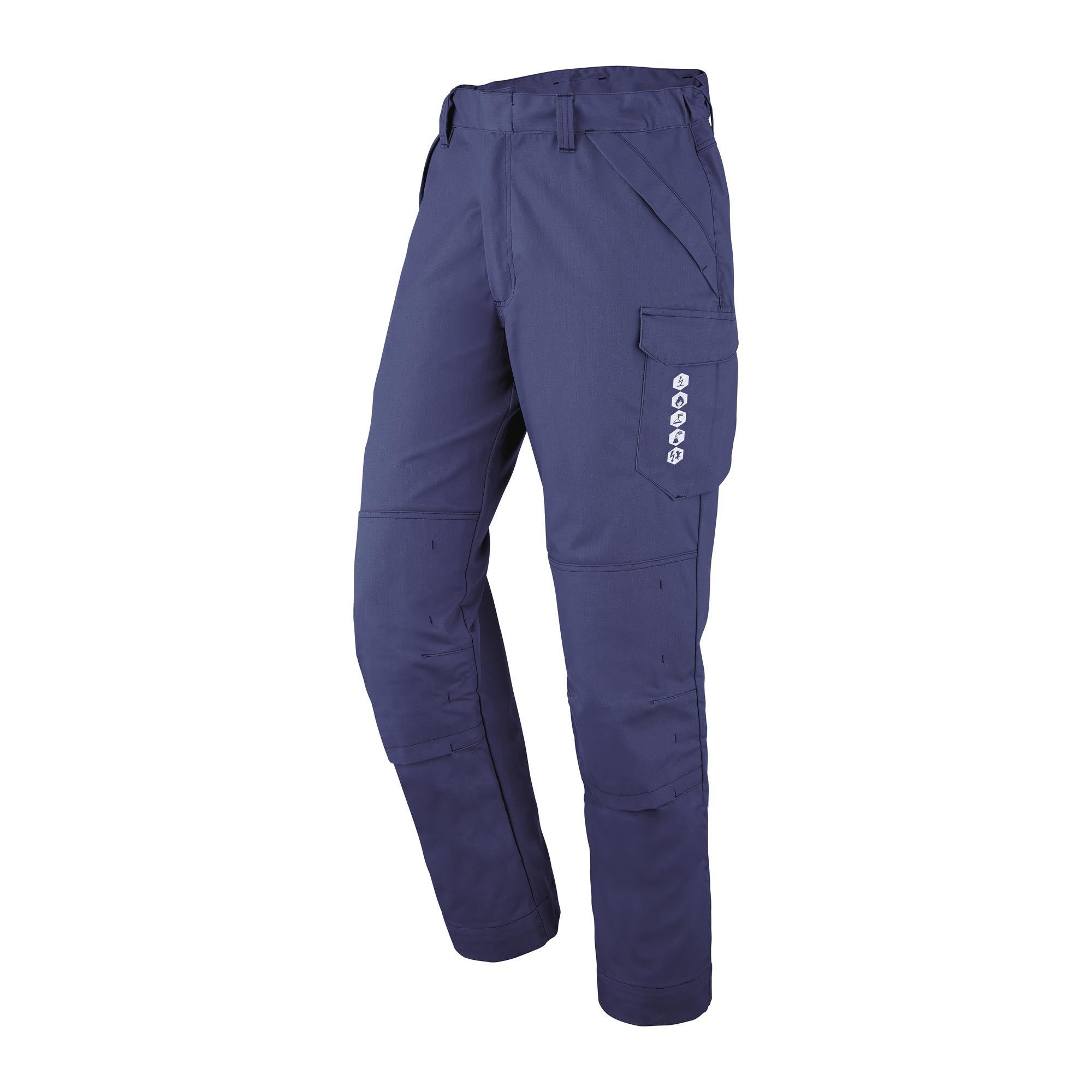
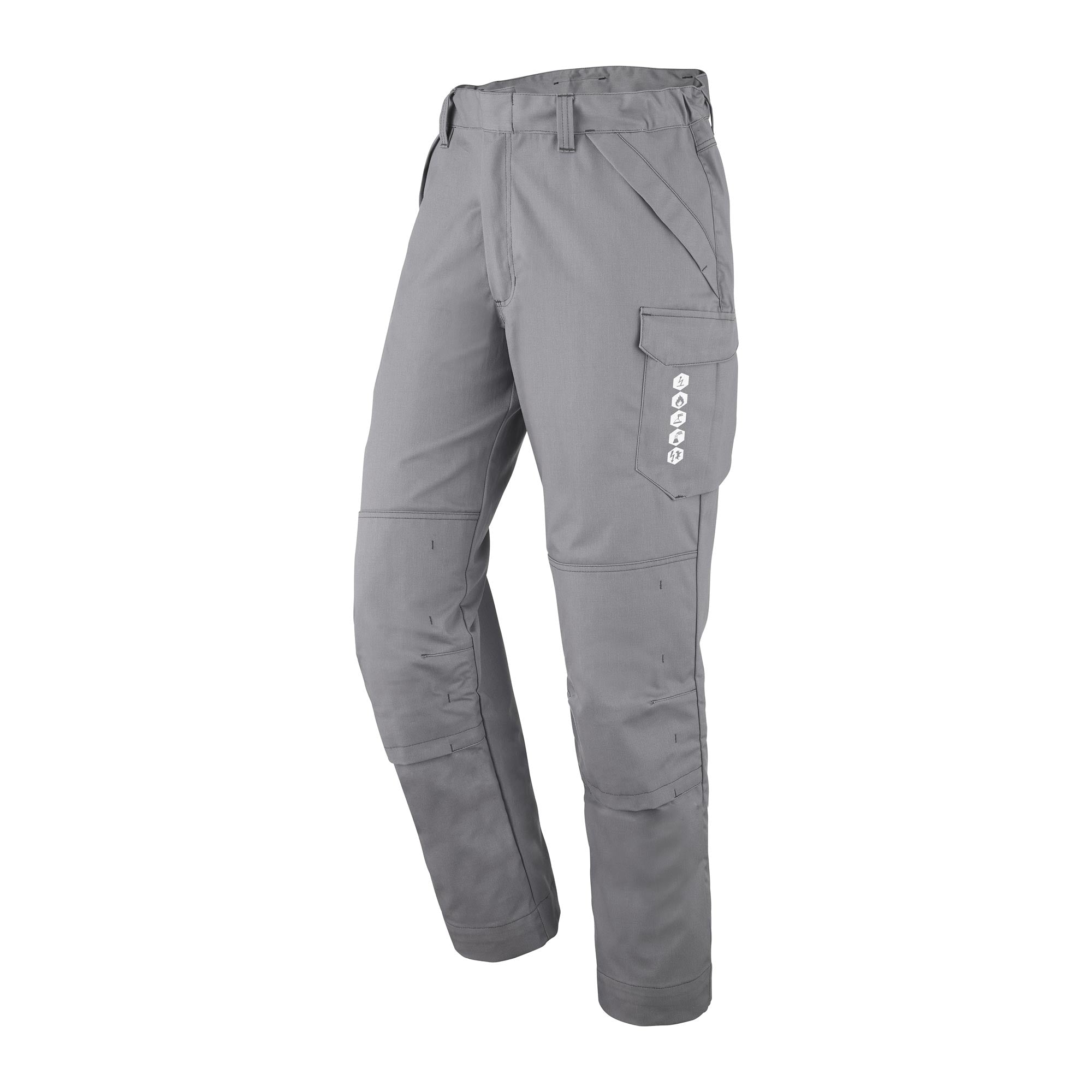
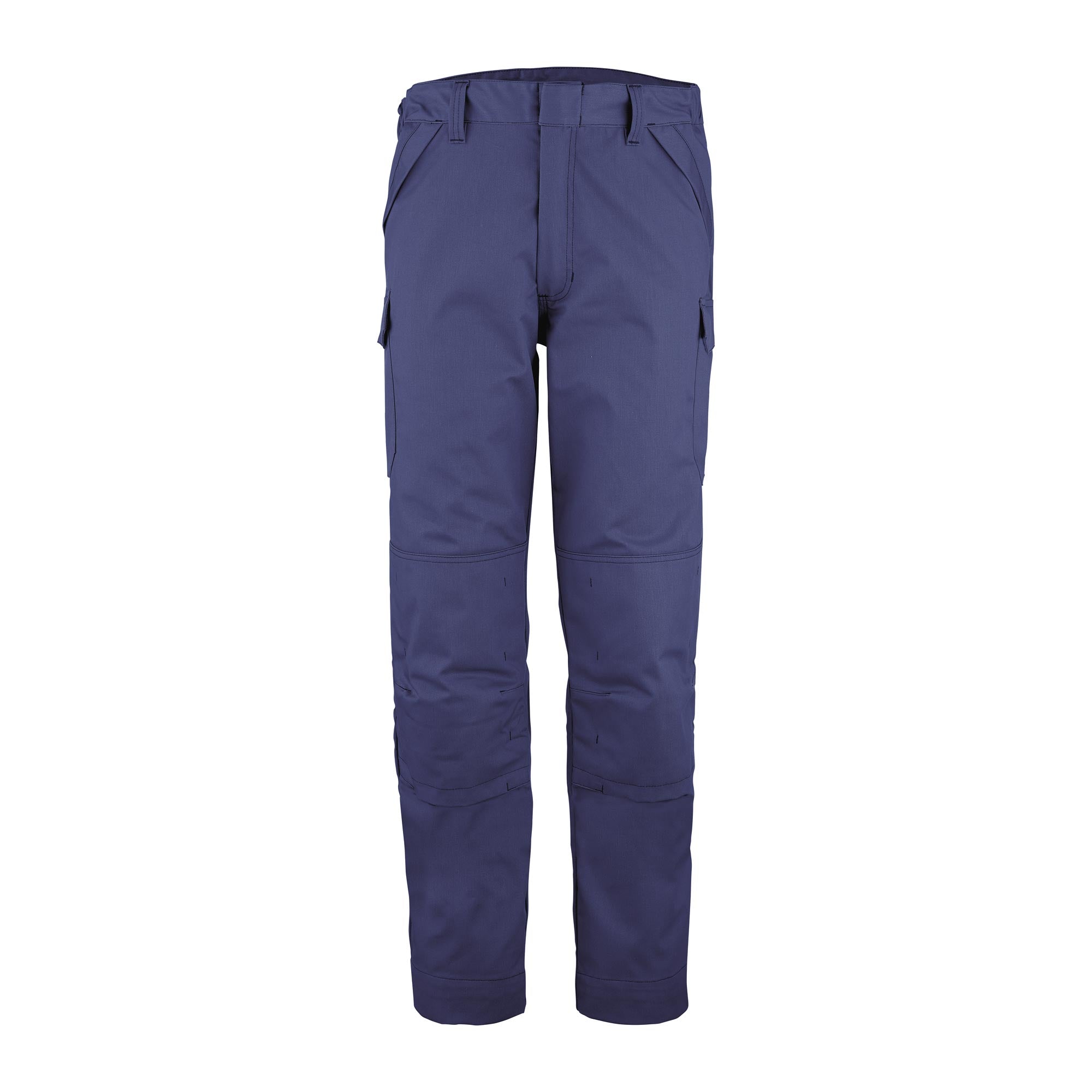
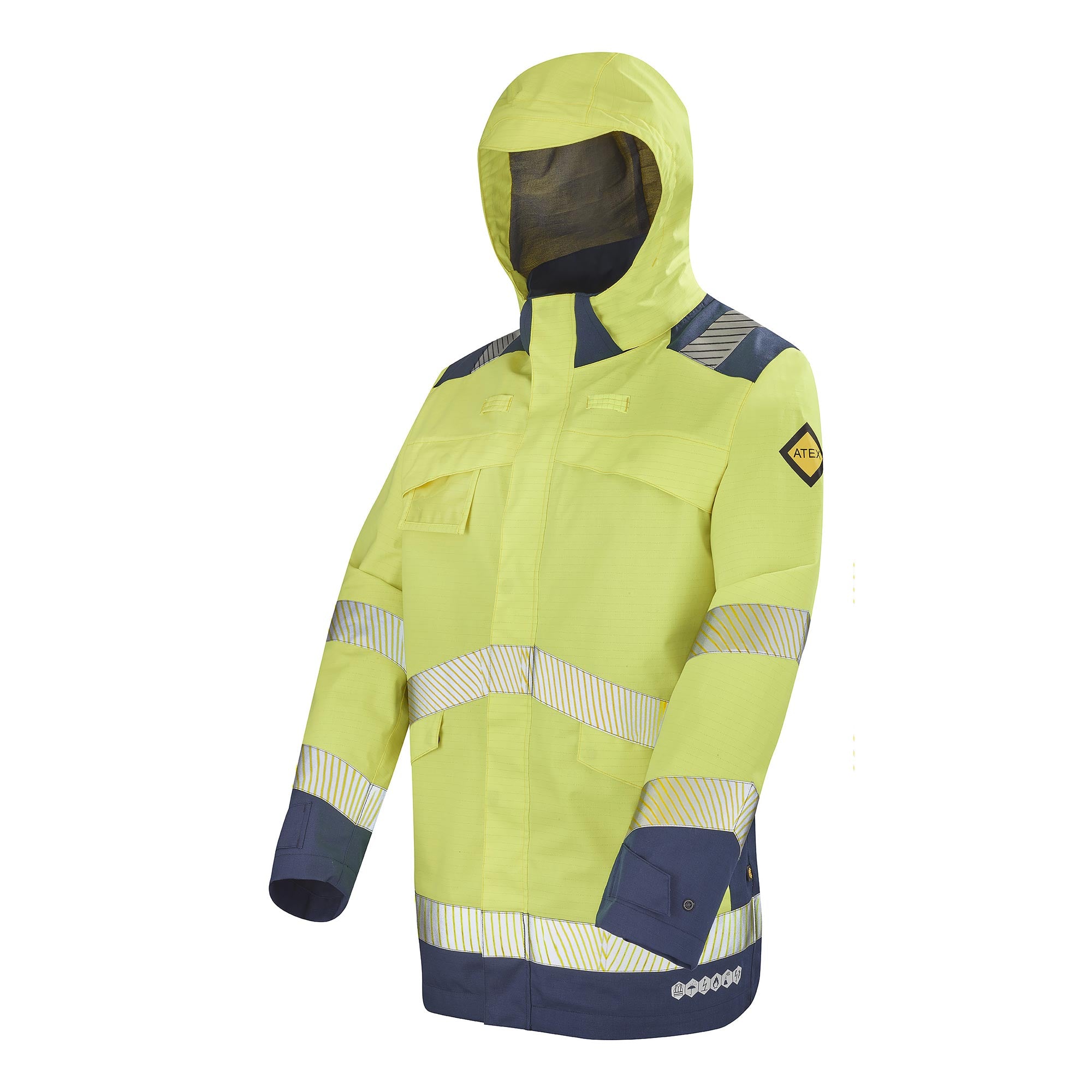
Our range covers all wearing configurations. The electrician trousers provide thermal protection for the lower limbs, combined with antistatic properties and finishes suited to daily wear: EN 14404 knee pockets, lightweight and breathable fabric, no exposed metal components. They coordinate with jackets and blouson jackets from the same range.
For operations in very high-risk environments, the electrician coverall provides full-body coverage, eliminating any gap between the upper and lower garments. This configuration is preferred for live working, high-voltage switchgear interventions and worksites with high incident energy levels.
Compatibility with other PPE
Arc flash protective clothing only fulfils its full role when integrated into a complete system. It must be used alongside complementary protective equipment, adapted to the specific risks of arc flash.
- Insulating gloves certified to the relevant voltage class
- Face shield or visor for arc flash protection
- Insulating helmet suitable for electrical work
- Antistatic safety footwear, EN ISO 20345 ESD rated
- Arc flash hood for operations with high incident energy levels
How to choose your arc flash protective clothing?
Selecting arc flash PPE requires a rigorous risk assessment. Evaluating the potential incident energy at the workstation is the key step, as it determines the minimum level of protection required. Other parameters help refine the selection to ensure reliable day-to-day use.
Adapting protection to the real risks of the workstation
Before selecting a garment, several questions help define your requirements. This analysis should ideally involve the HSE department, safety officers and the workers themselves, in order to balance safety and operational acceptance.
- What is the estimated incident energy at the workstation, in cal/cm²?
- Do operations take place in ATEX zones requiring EN 1149-5 certification?
- Are workers also exposed to heat, flames or chemical splashes?
- Is thermal comfort a concern for extended operations?
- What industrial laundering frequency is planned for the garments?
Comfort, ergonomics and breathability
PPE is only effective if it is worn fully and consistently. Thermal comfort, freedom of movement and breathability are therefore key selection criteria in their own right. Cepovett Safety fabrics are designed to combine technical protection with ergonomics, featuring cuts suited to professional movements and a design aimed at reducing thermal fatigue.
The long-term durability of the garment is also a deciding factor. Cepovett Safety PPE is manufactured to maintain its flame-retardant properties over time, as well as its antistatic and arc resistance performance, even after repeated industrial laundering cycles.
Cepovett Safety's expertise in arc flash protective clothing
Cepovett Safety has been supporting professionals in the electricity, maintenance and energy sectors for several decades in designing their workwear. Our technical expertise spans from fibre selection through to finished garment inspection. Our ranges dedicated to energy distribution reflect this integrated approach, with multi-standard garments certified to EN 61482, EN ISO 11612, EN 1149-5 and EN 13034.
Our teams develop garments in close collaboration with end users. This field-based approach allows us to address the practical constraints of each profession: technical movements, laundering frequency, climatic conditions and combined risks. Every PPE garment is tested and certified to the standards in force, with full traceability throughout the production chain. This rigour is a guarantee of safety for your teams and of compliance for your business.
How to care for your arc flash protective clothing?
The performance of arc flash PPE is maintained over time, provided the care instructions are strictly followed. A poorly laundered or damaged garment progressively loses its thermal and antistatic protection properties, compromising the safety of the wearer. A few rules must therefore be systematically applied.
The care of multi-standard garments must strictly follow the manufacturer's instructions. Industrial laundering at an ISO 15797-certified laundry is recommended to preserve technical performance and ensure the traceability required during HSE audits.
- No fabric softener: it degrades flame-retardant and dissipative properties
- Strictly observe the prescribed washing and drying temperatures
- Any repair using a non-certified component compromises overall compliance
- Regularly inspect the fabric, seams, fastenings and retroreflective tape
- Replace immediately if burn marks, tears or signs of wear are visible
- Separate garments contaminated with flammable substances before laundering
Equipping your teams with Cepovett Safety arc flash protective clothing means choosing PPE built to last, certified for the most demanding environments and designed for wearer comfort. Our range is aimed at all professionals in the electricity, maintenance and energy sectors who require a high level of technical performance and field reliability.
Understanding the risks of electric arc and arc flash
The electric arc, also known as arc flash, is a sudden physical phenomenon that occurs when current passes through the air between two conductors. This discharge releases a phenomenal amount of thermal, luminous and mechanical energy, often accompanied by molten metal projectiles. The consequences for the exposed worker can be devastating.
An extreme and unpredictable phenomenon
Arc flash is characterised by its violence and intensity. The temperatures generated at the core of the arc exceed 10,000 degrees — several times the surface temperature of the sun. The associated pressure wave can violently throw the worker and nearby equipment.
- Intense electrical discharge generating extreme heat
- Temperatures potentially exceeding 10,000 °C within milliseconds
- Molten metal and incandescent particle projectiles
- Pressure wave and risk of localised explosion
- Intense ultraviolet and infrared radiation
What are the consequences for exposed professionals?
Arc flash injuries are among the most severe seen in industrial environments. Deep burns, hearing damage, eye injuries, inhalation of toxic fumes: the variety of impacts justifies a comprehensive approach to protection. The energy, industrial maintenance and electrical distribution sectors account for the majority of exposures.
PPE alone is never sufficient protection. It must form part of a complete prevention approach that includes risk assessment, equipment isolation, operator training and the provision of appropriate collective and individual protective equipment.