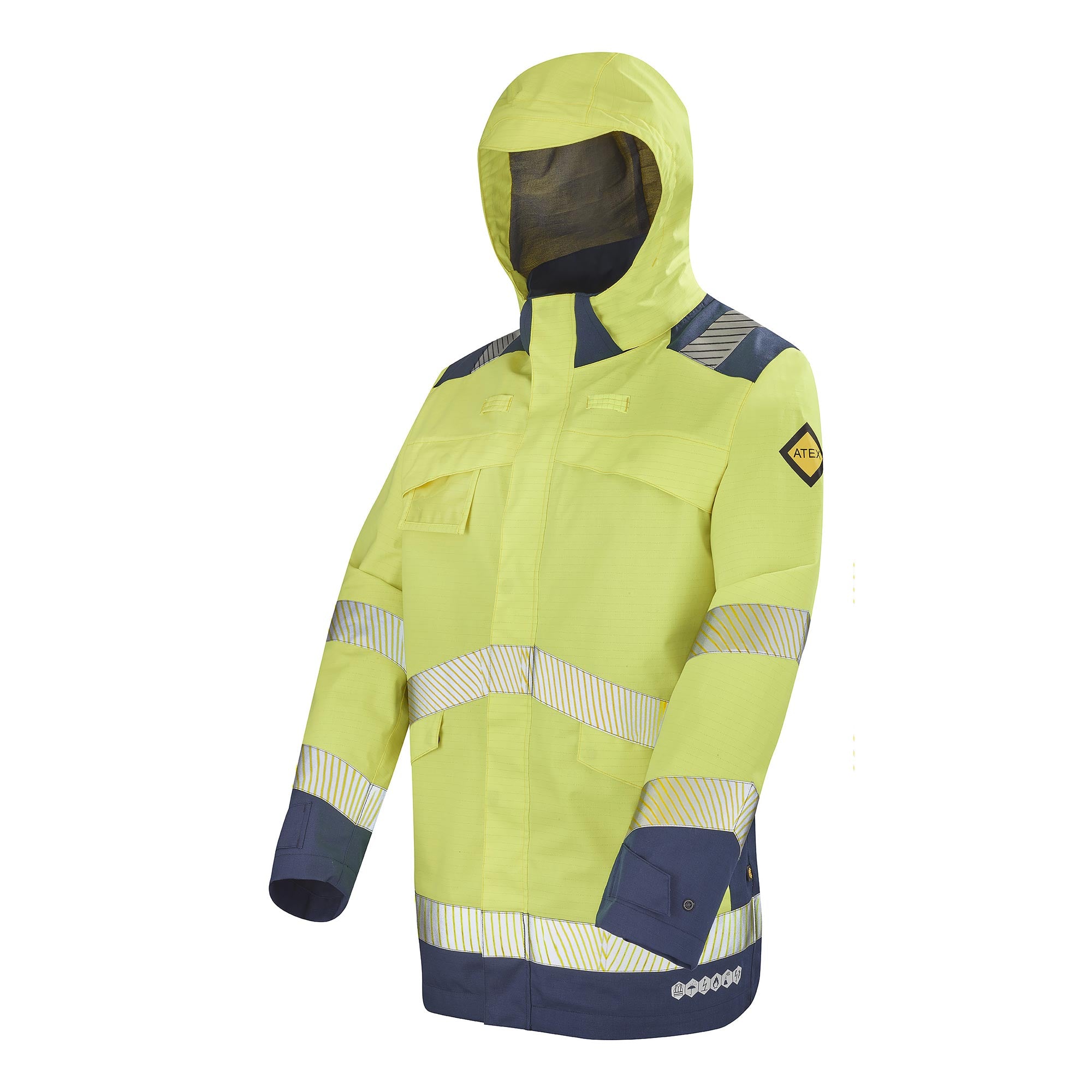
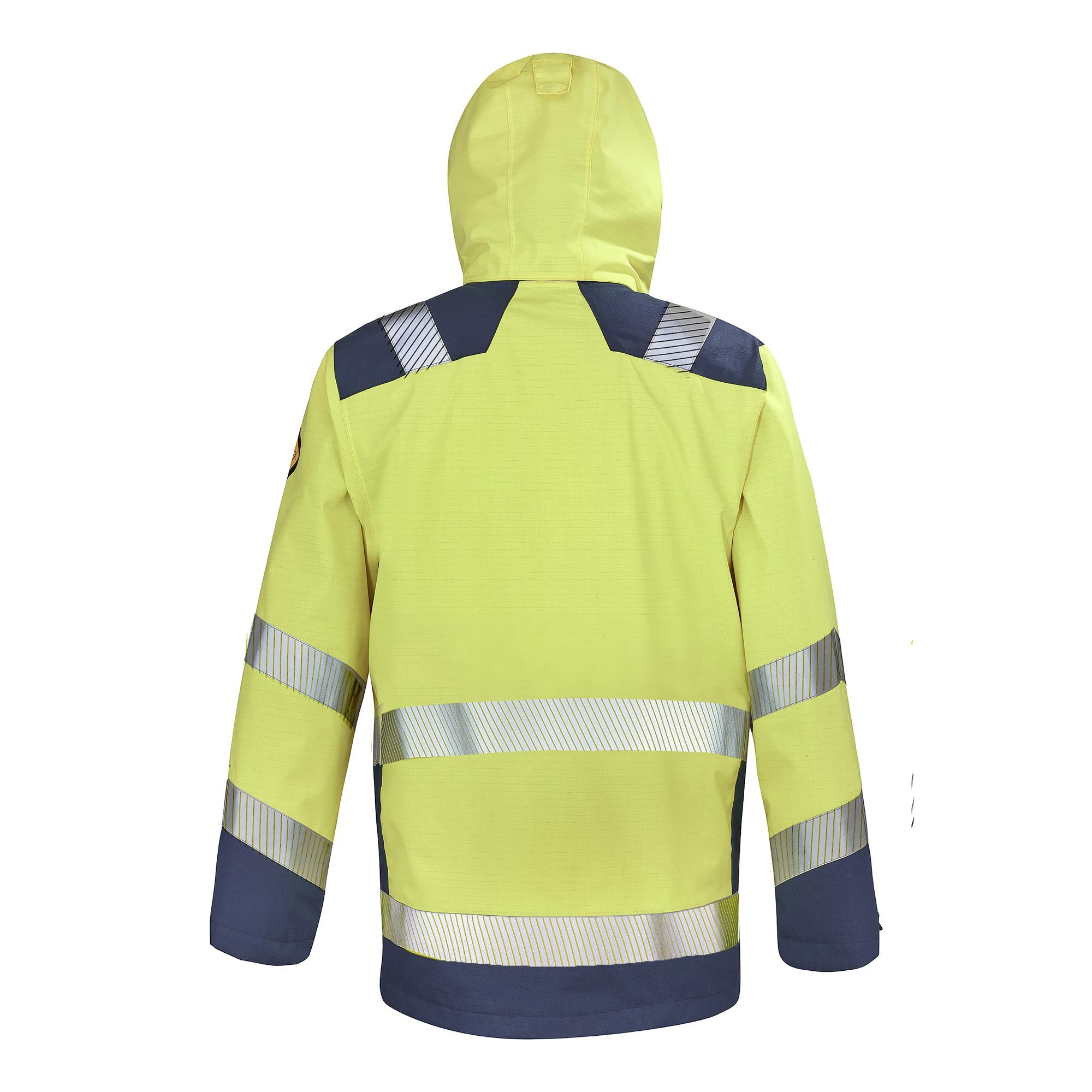
Why choose EN 1149-5 antistatic clothing for your interventions in ATEX zones?
In industrial environments where explosive atmospheres are present, even the slightest electrostatic discharge can trigger ignition. Your teams must be equipped with antistatic clothing designed to continuously dissipate these charges. Cepovett Safety develops a range of ATEX multi-hazard clothing certified to EN 1149-5 standards, meeting the requirements of explosive atmosphere zones. These technical garments ensure both operator safety and your company's compliance with regulatory obligations.
Understanding how the EN 1149-5 standard works, its assessment criteria, and best practices for selection is essential for equipping your teams effectively. Discover the normative requirements, sectors involved, and selection criteria for the antistatic garment best suited to your role.
What is the EN 1149-5 standard?
The EN 1149-5 standard defines the performance requirements for protective clothing with electrostatic properties. It forms part of a series of EN 1149 standards covering test methods and design criteria for dissipative textiles. Its main goal is to prevent the ignition of explosive atmospheres by electrostatic discharge.
What are the technical requirements of the EN 1149-5 standard?
To be EN 1149-5 certified, a garment must demonstrate its ability to reliably and durably dissipate electrostatic charges. This performance is based on textile design and its integration into a complete outfit.
- Use of dissipative materials incorporating conductive fibers, such as stainless steel or carbon
- Electrical continuity between the different parts of the garment
- Resistance tests according to EN 1149-1, EN 1149-3 and EN 1149-5 methods
- Maintenance of dissipative performance after industrial laundering
Flame retardant and antistatic, a frequent combination
In ATEX zones, the EN 1149-5 standard is often associated with EN ISO 11612, which certifies protection against heat and flame. An EN ISO 11612 certified garment is a flame-retardant garment: it is not fireproof; it slows fire spread on the textile and protects the skin during evacuation or emergency reaction. This combined certification is the foundation of multi-risk clothing worn in petrochemicals, energy, or chemical industries.
In which sectors should you wear antistatic PPE certified EN 1149-5?
Antistatic garments are not reserved for the chemical industry alone. Many sectors handle substances that can create an explosive atmosphere, whether gases, vapors, or combustible dust.
Industrial sectors concerned by ATEX zones
The EN 1149-5 standard's scope covers a wide range of activities. Risk identification requires a thorough analysis of the workstation and handled substances.
- Chemistry, petrochemicals, and refining
- Agriculture and food processing, especially in silos and cement works
- Pharmaceutical and cosmetics
- Energy distribution and production
- Transport and storage of combustible materials
- Handling metallic, grain, or plastic powders
What are the consequences of non-compliant PPE?
The employer assumes criminal and civil liability in the event of an accident linked to non-compliant equipment. European PPE regulations require the provision of equipment suitable for the assessed risks, certified and properly maintained. A non-certified element used for replacement or repair is enough to void the compliance of a whole garment.
The Cepovett Safety range for antistatic protection
Cepovett Safety designs and manufactures technical clothing for the most demanding environments. Our mastery of the textile chain lets us select the best materials and guarantee standard compliance across all our product ranges.
Garments tailored to each role and sector
Our offer covers all antistatic protection needs, with garments combining EN 1149-5 and EN ISO 11612 standards. Our range includes all forms of antistatic apparel: antistatic jacket, antistatic trousers, antistatic coveralls, parka, and multi-standard high-visibility clothing. Each garment is designed to integrate into a coherent protective system, adapted to the field conditions your teams face.
The technical fabrics used include conductive fibers distributed homogeneously in the fabric. This structure ensures continuous dissipation of charges, regardless of operator movement. Resistance to wear and industrial laundering is incorporated from the design stage to preserve performance over the garment’s full lifespan.
Compatibility with other PPE in your protective system
An antistatic garment only fulfills its role if it’s paired with appropriate complementary PPE. EN ISO 20345 A standard antistatic footwear, conductive gloves, suitable helmets: together they create a full dissipation chain. For electrical work and live-line maintenance, our clothing for electricians combine EN 1149-5 requirements with electric arc protection as per IEC 61482 standard.
The garment must remain in contact with the skin at neck and wrists to ensure electrical continuity. Wearing a grounding wrist strap may reinforce dissipation in the most sensitive environments. Wearing non-certified metal accessories, such as badges, is forbidden.
How to choose your EN 1149-5 antistatic garment?
Choosing antistatic PPE depends on accurately assessing the risks and clearly understanding the usage context. Several criteria must guide your decision to equip your teams effectively.
Adapting protection to the actual risks of the role
Before selecting a garment, ask yourself a few key questions about the environment and the tasks performed. This analysis leads you to the most appropriate choice.
- Is your work area classified as ATEX, and to what risk level?
- Which combustible or explosive substances are handled on site?
- Are operators also exposed to thermal or chemical risks?
- How often is industrial laundering scheduled for garments?
- Are there high-visibility requirements for certain jobs?
Comfort, ergonomics, and daily durability
A protective garment is only effective if it is worn correctly—meaning comfortably—throughout the work period. Breathability, ergonomic cut, adaptation to technical gestures, and finishing quality are decisive criteria. For professionals working on electrical networks or in energy distribution, our garments offer thermal comfort and multi-standard compliance.
The durability of dissipative performance over time is crucial. Cepovett Safety fabrics are tested to maintain their long-lasting flame-retardant properties and antistatic properties, in compliance with the industrial laundering cycles set by ISO 15797 standard.
Cepovett Safety expertise in antistatic clothing
For several decades, Cepovett Safety has supported French and European industry in choosing and manufacturing PPE. Our expertise is based on complete control of the textile value chain, from material development to finished garment production.
Our technical teams work directly with users to design outfits suited to field constraints. This approach allows us to reconcile the strictest standard requirements with the comfort and functionality operators expect. Each multi-risk collection is certified to EN 1149-5, as well as EN ISO 11612, EN ISO 11611, EN 13034 and IEC 61482-2 for the most demanding environments.
How to care for your antistatic garments to maintain their compliance?
PPE maintenance directly affects its lifespan and performance retention. Poorly maintained antistatic clothing gradually loses its dissipative properties and no longer guarantees operator safety. A few simple rules must be strictly followed.
- No fabric softener: it clogs the conductive fibers and reduces dissipative properties
- Strictly follow the washing and drying temperatures specified on the label
- Use neutral detergents, with no aggressive or bleaching agents
- Any repair using a non-certified component compromises garment compliance
- Regularly inspect fabric, seams, fasteners, and wear zones
- Immediately replace the garment if any visible signs of deterioration are noticed
Industrial washing in a specialized laundry is recommended for ISO 15797-certified collections. This guarantees compliance with technical parameters and maintenance traceability—a requirement increasingly requested during client audits. Choosing Cepovett Safety antistatic clothing means equipping your teams with compliant, comfortable, and durable PPE suitable for your sector's most demanding requirements.
Understanding the risks associated with static electricity in the workplace
Static electricity results from an imbalance of charges between two surfaces in contact or movement. In industrial settings, this seemingly benign phenomenon can cause serious accidents when it occurs in the presence of combustible substances or in an explosive atmosphere.
Where do electrostatic discharges at the workstation come from?
Electrostatic charges build up mainly through friction between different materials. Synthetic textiles, moving equipment, and the operators themselves are all potential sources. Certain conditions amplify this phenomenon and require increased vigilance.
- Repeated rubbing between clothing, equipment, and handled materials
- Dry atmospheres and low relative humidity
- Presence of non-dissipative synthetic materials
- Lack of grounding for operators and equipment
- Handling powders, granules, or flammable liquids
What are the effects in sensitive environments?
Even a low-intensity electrostatic discharge can be enough to ignite a gas/air mixture or combustible dust in suspension. In classified ATEX zones, this risk is systematically assessed and covered by European PPE regulations. Potential consequences range from simple production loss to major fire, with considerable human and material impacts.
Beyond the risk of explosion, static electricity also damages sensitive electronics handled in the pharmaceutical, electronic, or food industries. The issue thus goes beyond just protecting people and directly affects process quality.