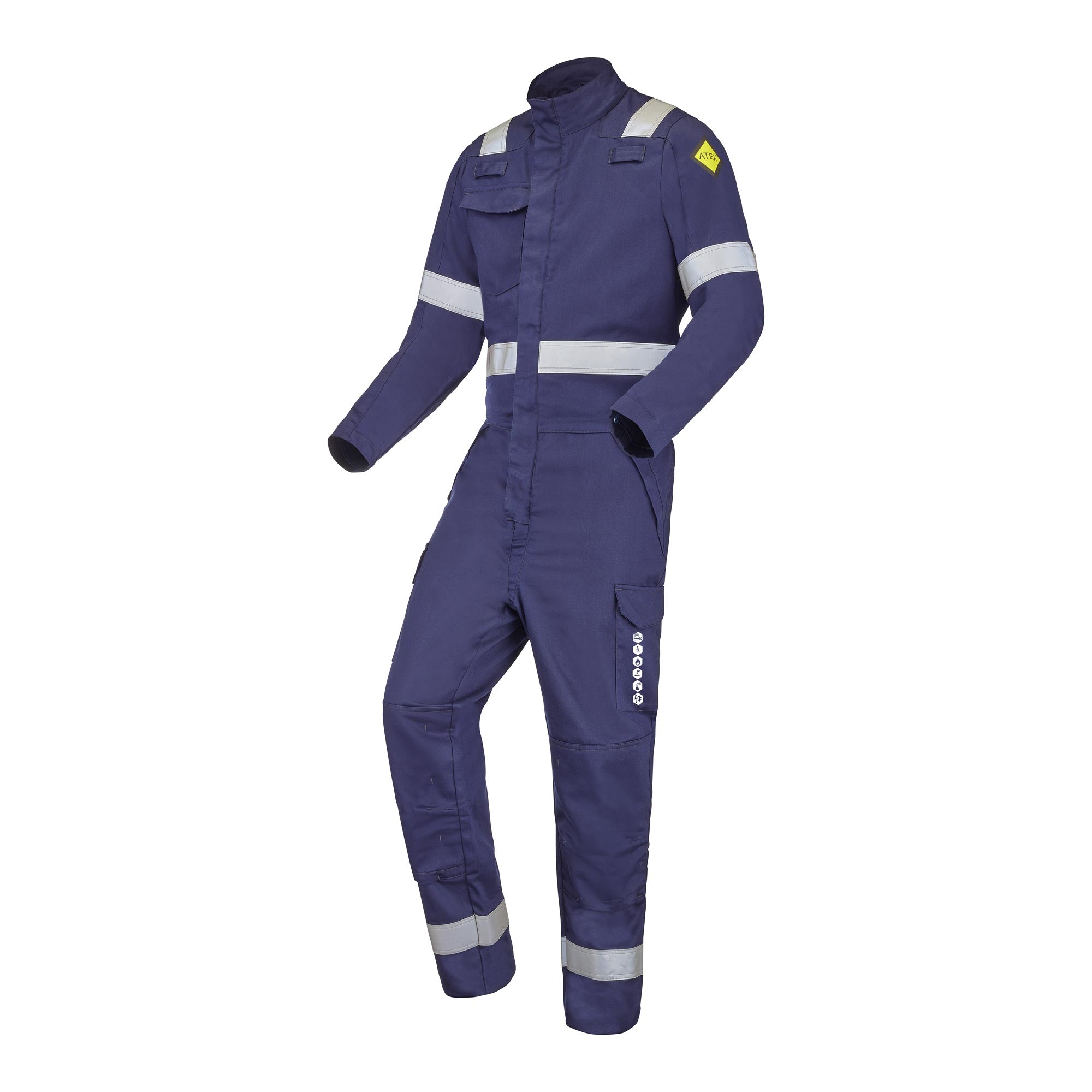
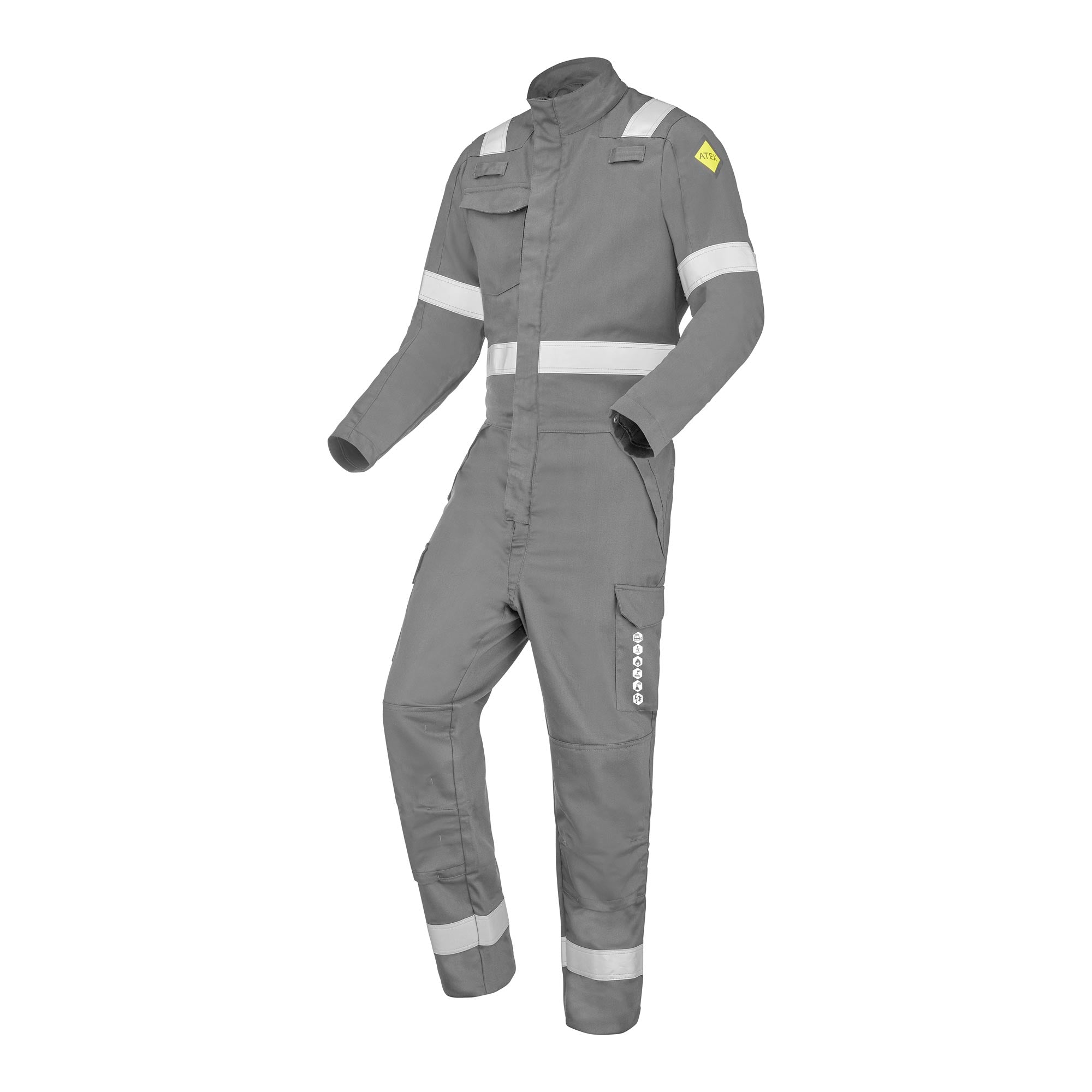
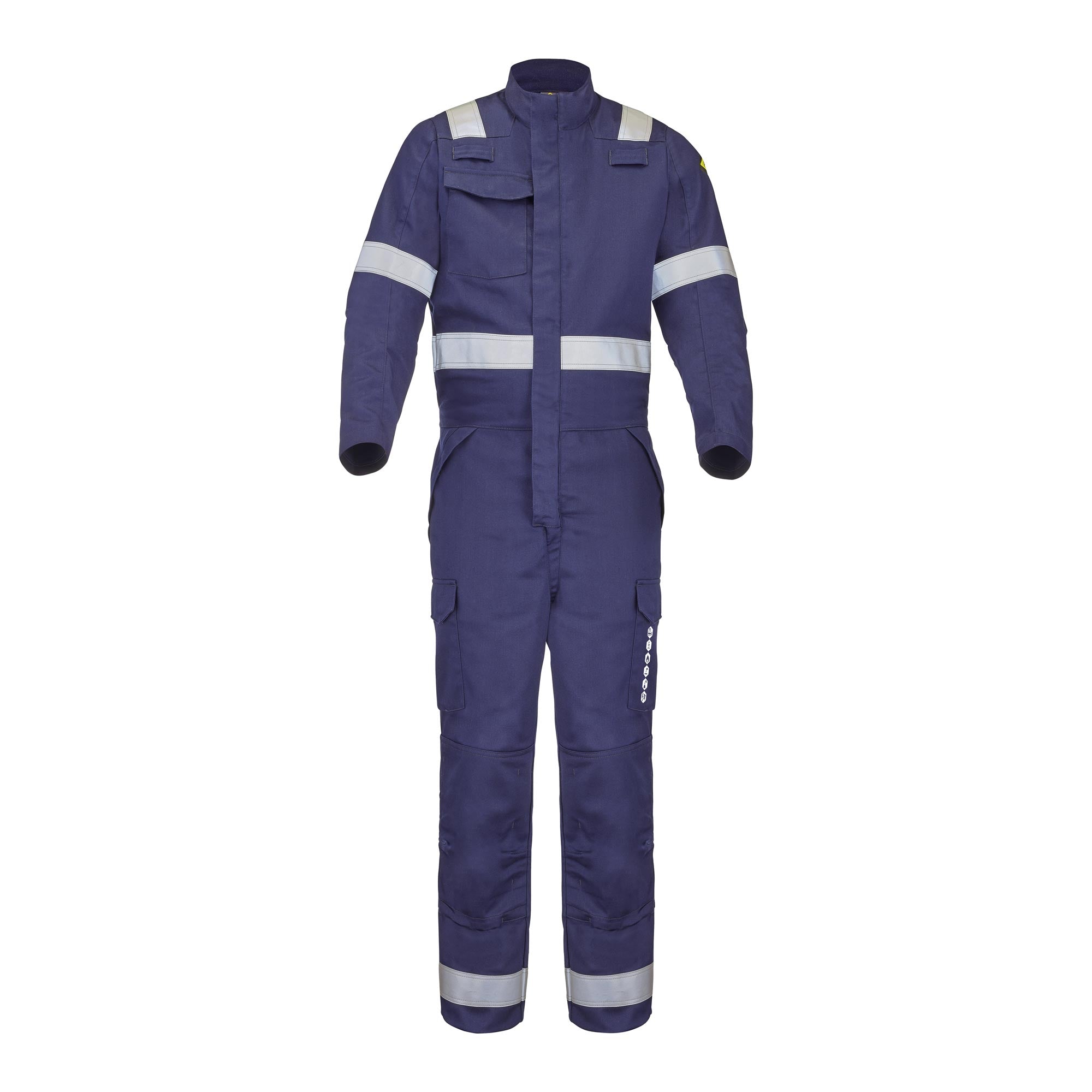
Why Choose a Certified Welding Coverall for Your Operations?
Welding occupations expose operators to intense thermal hazards: molten metal spatter, radiant heat, brief flame contact, and sparks. The welding coverall is the most protective PPE available for these environments, as it provides full-body coverage and eliminates any exposed gap between the upper and lower body.
Cepovett Safety has developed a comprehensive range of certified welding coveralls compliant with EN ISO 11611 and EN ISO 11612 standards. Designed for professional welders, boilermakers, and foundry technicians, these garments combine technical protection, resistance to industrial laundering, and workplace comfort.
Why Is a Welding Coverall an Essential Piece of PPE?
Welding is one of the industrial processes most exposed to thermal hazards. Electric arcs, torch flames, and molten metal generate a combination of risks that can cause severe and lasting burns. The welding coverall addresses these risks through a comprehensive approach to full-body protection.
Integrated Protection Against the Specific Hazards of Welding
Welders are simultaneously exposed to several categories of thermal hazard, which justifies the use of a complete, certified garment. A simple overshirt or apron is not sufficient to protect all vulnerable areas.
- Molten metal spatter that can reach several hundred degrees Celsius
- Exposure to radiant heat from the electric arc and red-hot metals
- Brief flame contact and sparks during arc striking or cutting operations
- Accidental contact with live parts of welding equipment
- Intense ultraviolet and infrared radiation emitted by the arc
Equipment Designed for Demanding Industrial Environments
The welding coverall is the standard choice in workshops, on construction sites, and in industrial maintenance. It is particularly suited to dusty environments where sparks can lodge in the folds of a separate jacket and trouser combination. A garment certified to EN ISO 11611 is a flame retardant: it is not fireproof, but it slows the spread of flame across the fabric and protects the skin long enough to evacuate or respond to an emergency. This distinction is fundamental to correctly understanding the actual scope of the PPE and never overestimating how long it can protect the wearer.
What Is the EN ISO 11611 Standard for Welding Protective Clothing?
The EN ISO 11611 standard defines the performance requirements for protective clothing used during welding and allied processes. It governs the resistance of the fabric to molten metal spatter, radiant heat, brief flame contact, and accidental contact with live parts up to 100 V.
Two Performance Classes: Class 1 and Class 2
The standard distinguishes two levels of protection, to be selected according to the welding process and the expected intensity of spatter. This classification is central to correctly sizing your PPE.
- Class 1: lower-risk applications, suitable for TIG welding, brazing, and low-spatter processes
- Class 2: higher-risk applications, suitable for MIG/MAG welding, electric arc, and plasma cutting
- Differentiated molten metal droplet impact testing by class
- Radiant heat transfer index RHTI24 measured under laboratory conditions
Additional Complementary Regulatory Requirements
Cepovett Safety welding coveralls frequently carry multiple certifications to cover the combined exposures of the workstation. The EN ISO 11612 standard certifies protection against heat and flame, with performance codes from A to F as detailed below.
- Code A: resistance to flame spread – mandatory for any EN ISO 11612 certification
- Code B: convective heat – protection against hot air
- Code C: radiant heat at distance
- Code D: small molten metal splashes, typical of welding
- Code E: large molten metal splashes, typical of foundry work
- Code F: contact heat from a hot surface
Technical Features of Cepovett Safety Welding Coveralls
Beyond certifications, the quality of construction and the choice of technical materials make a real difference in everyday use. Our coveralls are designed to withstand intensive conditions and maintain their performance throughout their entire service life.
High-Performance Flame-Retardant Materials
The fabrics used in our heat and flame protective clothing are selected for their flame-retardant properties, whether inherent or achieved through proven technical treatments. Their weight is matched to the intensity of the activity, with lighter options available for summer use and heavier constructions for extended welding sessions. The selected fibres also ensure resistance to repeated industrial laundering.
Our ranges favour materials such as flame-retardant treated cotton, technical modacrylics, and multi-layer assemblies. Each choice reflects a balance between thermal comfort, breathability, durability, and level of protection. Our R&D teams collaborate with spinners and weavers to develop solutions suited to each specific use case.
Robust Construction for Heavy-Duty Use
The durability of a welding coverall depends as much on the fabric as on the quality of the finish. Reinforced seams, protected fastenings, and technical panels each contribute to the safety and longevity of the garment.
- Reinforced seams stitched with heat-resistant technical threads
- Secure fastenings: anti-spatter flaps, protected zips, encapsulated metal press studs
- Reinforcements at high-wear areas: knees, elbows, and shoulders
- Resistance to abrasion and mechanical stress at the workstation
Ergonomics and Comfort in Extreme Conditions
An uncomfortable welder adopts compensatory postures and loses precision. Coverall designs therefore incorporate optimised freedom of movement, with cuts engineered for crouching, overhead work, and confined space operations. The breathability of the fabric reduces thermal discomfort during prolonged welding sessions.
How to Choose Your Welding Protective Coverall
Selecting a welding coverall requires consideration of several complementary criteria. The protection class is only the first element of a complete analysis, which must also account for the duration of exposure, working conditions, and the build of the operators.
Identifying the Required Level of Protection
Before selecting a model, it is helpful to structure your requirements around a few key questions. This analysis will guide you towards Class 1 or Class 2 and allow you to anticipate any additional certifications required.
- Which welding processes are used: TIG, MIG/MAG, arc, brazing, or plasma?
- What is the expected intensity and frequency of spatter?
- Do operations take place in a workshop, outdoors, or in a confined space?
- Are additional hazards present: electric arc flash, ATEX zones, or high-visibility requirements?
- What is the typical duration of a continuous welding session?
Key Technical Criteria to Consider
Beyond the protection class, several criteria should guide your decision. Fabric weight determines the level of thermal protection and comfort according to the season. The quality of the finish determines the longevity of the garment. Compatibility with other PPE, including welding jackets and welding trousers, enables a modular PPE offering for your teams.
Matching the Garment to the User and Other PPE
A welding coverall must integrate into a coherent protection system. Sizing options, compatibility with other equipment, and the professional appearance of the team are all parameters to factor into the decision.
- Welding hood or face shield suited to the process
- Certified welding gloves – leather or flame-retardant textile depending on spatter levels
- High-leg safety boots with resistance to molten metal spatter
- Leather welding apron for the most highly exposed operations
- Ear plugs or hearing protection helmet suited to the noise level at the workstation
Cepovett Safety's Expertise in EN ISO 11611 Welding Coveralls
Cepovett Safety has been supporting welding professionals, metallurgists, and foundry technicians for several decades. Our mastery of the textile supply chain – from fibre selection to final garment construction – enables us to guarantee a high level of performance and full traceability. Every welding coverall is tested and certified in accordance with applicable European standards, with complete technical documentation available for HSE managers and procurement teams.
Our technical teams work directly with end users to design garments tailored to real-world constraints. This approach allows us to meet the most stringent regulatory requirements whilst delivering the comfort and functionality that operators expect. We also offer a personalised advisory service to industrial businesses, helping them to size their PPE inventory and optimise replacement cycles.
How to Care for Your Welding Coverall to Maintain Compliance
Garment care directly determines PPE service life and the maintenance of its performance. A welding coverall that is incorrectly laundered or damaged will progressively lose its flame-retardant properties, compromising the safety of the operator. A number of strict rules must be consistently observed.
Industrial laundering by an ISO 15797-certified laundry is recommended for professional PPE fleets. It ensures compliance with technical parameters and provides laundering traceability, an increasingly scrutinised requirement during HSE audits.
- No fabric softener: it degrades flame-retardant properties and clogs the fibres
- Strictly observe the washing and drying temperatures specified by the manufacturer
- Use neutral detergents, free from bleach or aggressive agents
- Any repair carried out with a non-certified component compromises the compliance of the coverall
- Regularly inspect the fabric, seams, fastenings, and high-wear areas
- Replace the coverall immediately if burn marks, tears, or significant wear are visible
Equipping your teams with a Cepovett Safety welding coverall means choosing a technical, certified, and durable PPE solution. Our range is designed for professional welders, boilermakers, and foundry technicians who demand a high level of performance and comfort suited to their workstation. Our textile expertise, combined with a rigorous field-based approach, supports you in securing the daily safety of your welding operations.